
If you’ve been to get an eye exam, you probably know the question: “Which looks clearer, 1 or 2?” This familiar part of an eye check-up is more than just a routine. It’s a simple, comfortable part of a comprehensive eye exam that gives your eye care team a clear picture of your vision.
This process is a key tool eye doctors use to understand how your eyes see the world. A refraction eye exam is the part of your check-up that helps us find your unique prescription for glasses or contact lenses.
More Than a Vision Test
What Eye Refraction Means
Refraction is the term for how light moves through different materials. In the case of your eyes, a refraction test is how we check the way your eyes bend light. When light enters your eye correctly, you see a sharp image. If it doesn’t, your vision might be blurry.
A Key Part of Your Full Eye Exam
Your refraction is just 1 important piece of an eye exam. While the refraction focuses on finding your prescription, the health check looks for other conditions. We check everything from eye pressure to the structures inside your eye and more to get a complete view of your ocular health, allowing us to screen for a wide range of potential eye diseases.
How the “1 or 2” Test Works
The Phoropter and the Eye Chart
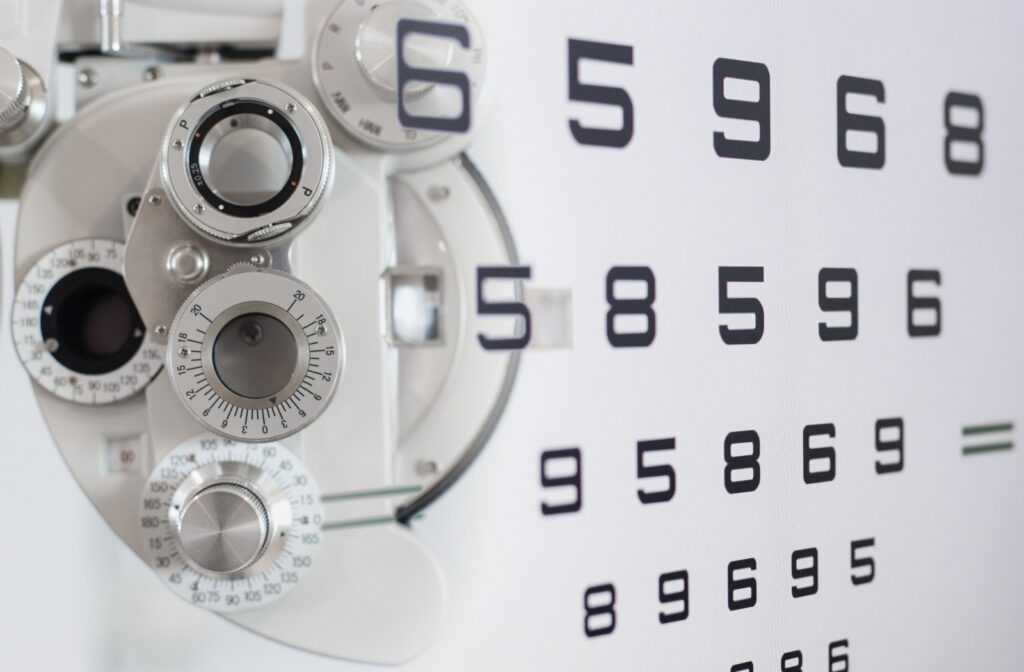
During an exam, you may look through an instrument that looks like a large mask. This is called a phoropter. This device holds many different lenses that we can switch between. As you look through it, we’ll ask you to read letters from an eye chart placed across the room. This process is a valuable tool for evaluating your visual acuity and overall eye health.
Find Your Clearest Vision
Your optometrist may change the lenses and ask you that classic question, “Which looks clearer, 1 or 2?” There are no wrong answers, as your personal feedback is what guides your eye doctor. Each response helps them narrow down the lens power that gives you your sharpest, most comfortable vision.
What a Refraction Test Can Detect
This simple test helps your eye doctor spot common vision issues called refractive errors. These conditions affect how your eyes focus light, and they are very common. A refraction test can identify:
- Nearsightedness (myopia) and farsightedness (hyperopia): Myopia makes distant objects appear blurry, while hyperopia makes it hard to focus up close.
- Astigmatism: Vision is a bit fuzzy at any distance.
- Presbyopia: Age-related farsightedness that can make reading a challenge.
Your Results and What They Mean
Your Personal Eye Prescription
The main result of a refraction test is your prescription, a specific set of numbers that typically lasts 1–2 years. These numbers are a precise map that tells an optical lab exactly how to craft lenses for your vision needs. This allows for customized glasses or contacts made just for you.
A Quick Note on Insurance
Some insurance plans may cover a refraction test differently from the medical part of your eye exam. Our team is here to help you make sense of your vision benefits. We are always happy to answer your questions so you feel comfortable and informed.
Book Your Exam Before the Year Ends
As the end of the year approaches, now is a great time to schedule an eye exam. This time can be busy as people prepare for the coming year. Booking ahead of time can help mitigate the stress of fitting in appointments at the last minute.
Start the New Year with Clear Sight
Seeing clearly can make a big difference in everything you do, from work to hobbies. An appointment with your family eye doctor in Yorba Linda, California, can help make sure your vision is ready for a great year ahead. It’s a wonderful way to invest in your well-being for 2026.
At Dr. Bittel Optometry, our compassionate team is dedicated to your family’s eye health. We provide exceptional customer service and make sure you understand every step of your care. Call us to schedule your appointment and start the new year with fresh eyes.